
Landmark agreement to reshape global trade dynamics and unlock a $25 trillion market across two economic powerhouses.
New Delhi, January 2026
In a momentous breakthrough, India and the European Union have officially announced the conclusion of a landmark free trade agreement, bringing to an end nearly 20 years of on-and-off negotiations. Leaders on both sides hailed the pact as transformative for the global economy and a major stride toward deepening political and commercial ties.
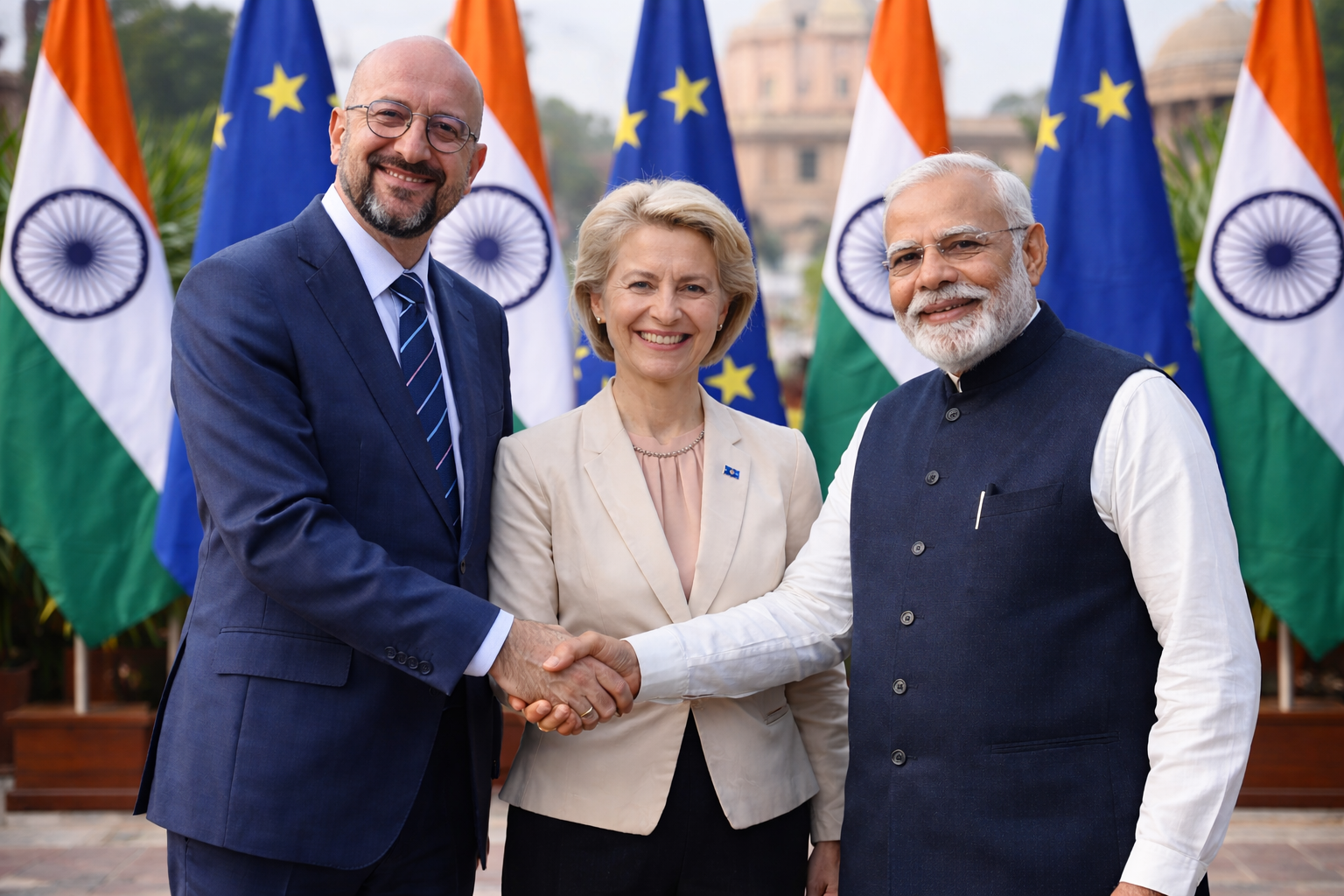
At a joint press event in New Delhi, European Commission President Ursula von der Leyen declared, “We did it. This is the mother of all trade deals.” Indian Prime Minister Narendra Modi echoed her sentiment, calling it a “historic step toward a new era of collaboration.”

Deal Highlights: Lower Tariffs, Bigger Markets
The trade agreement, once ratified, will allow the free flow of goods between the EU’s 27 nations and India — together representing nearly 25% of the world’s GDP and a combined market of 2 billion people.
Key provisions include:
-
Tariff elimination on most industrial goods such as machinery, chemicals, electronics, and aerospace equipment.
-
Significant duty reductions on motor vehicles, with current tariffs of up to 110% being slashed to 10% for up to 250,000 vehicles annually — far exceeding past quotas.
-
Expanded market access for Indian textiles, gems, handicrafts, leather goods, and marine products into the EU.
-
Protection of sensitive sectors in India like dairy, cereals, poultry, and soy, to balance local concerns.
Strategic Mobility & Economic Integration
Beyond trade, the deal includes a mobility pact that streamlines short-term professional travel between India and EU countries, aimed at enhancing talent exchange, research cooperation, and investment facilitation.
Brussels highlighted the agreement’s role in boosting supply chain resilience, while Delhi emphasized the opportunity to elevate small businesses, agriculture exports, and manufacturing under the ‘Make in India’ initiative.
Leaders Send Geopolitical Message to the US
The announcement arrives amid rising global protectionism and strained US trade relations. President Donald Trump’s tariff wars — including recent 50% levies on Indian goods — have pushed India and the EU to diversify trade ties.
European Council President António Costa remarked, “This deal sends a strong message: cooperation beats tariffs. India and the EU choose partnership over confrontation.”
Prime Minister Modi added, “This is India’s biggest FTA yet. It opens the door for our farmers, artisans, and manufacturers to thrive in European markets.”
Next Steps: Formal Ratification and Strategic Expansion
While the agreement text has been finalized, formal signing is expected later in 2026 after review and ratification by the European Parliament and Indian legislature. Meanwhile, talks continue on climate cooperation, defence partnerships, and cybersecurity collaboration — all high on the strategic agenda.
India’s Defence Minister Rajnath Singh confirmed ongoing negotiations with the EU on joint defence production and maritime security, calling the dialogue “constructive and forward-looking.”
Background: A Long Road to Agreement
Trade discussions between India and the EU originally began in 2007 but stalled in 2013 due to disputes over tariffs and regulatory standards. Talks resumed in July 2022 and intensified over the past year amid mounting pressure to finalize the deal.
In 2024-25, bilateral merchandise trade between India and the EU reached $136 billion, making the EU India’s largest trading partner. The deal is expected to push that figure dramatically higher in the coming years.