

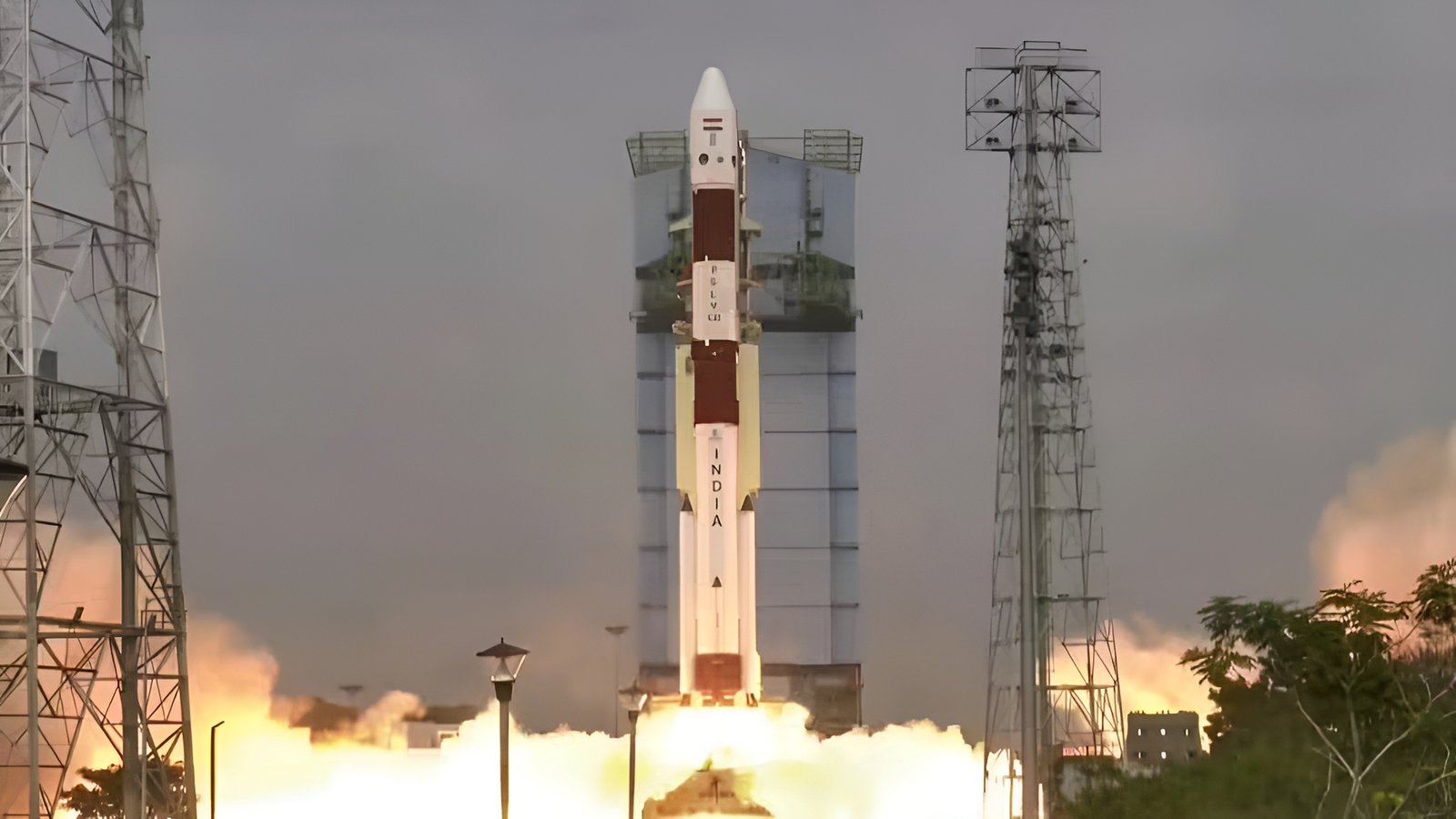
ISRO confirms deviation during third stage of the rocket; EOS-N1 satellite deployment still unverified.
India’s ambitious first space mission of 2026 encountered a technical anomaly, casting uncertainty over the successful deployment of the EOS-N1 Earth observation satellite and 14 co-passenger payloads.
On Monday, ISRO’s PSLV-C62 rocket lifted off from the Satish Dhawan Space Centre in Sriharikota, Andhra Pradesh. The launch vehicle was carrying the EOS-N1 (Anvesha) satellite along with 14 domestic and international co-passenger satellites. However, the Indian Space Research Organisation (ISRO) later confirmed that the mission experienced an “anomaly” during its third stage, which caused the rocket to deviate from its planned trajectory.
“We had attempted the PSLV-C62 launch mission. We are analysing the data and shall come back to you,” ISRO stated briefly after the event.
What Went Wrong?
ISRO Chairman V. Narayanan clarified that the anomaly was detected during the third stage of the mission, impacting the rocket’s flight path and raising questions about the satellite deployment. The space agency is currently analysing telemetry data to determine whether the payloads reached their intended polar sun-synchronous orbits.
As of now, ISRO has not confirmed the placement status of the satellites, including EOS-N1, a high-precision Earth observation satellite crucial for applications like agriculture monitoring, disaster management, and defense.
Significance of the PSLV-C62 Mission
The PSLV-C62 launch marked ISRO’s 64th flight of the Polar Satellite Launch Vehicle (PSLV), a reliable workhorse of India’s space programme. The mission was particularly significant as it followed the aborted PSLV launch in 2025 due to a technical issue, adding to the anticipation and importance of Monday’s launch.
The rocket was also expected to demonstrate a miniature re-entry capsule from a Spanish startup, which would’ve tested advanced in-orbit technologies. The 14 co-passenger satellites included both commercial and academic payloads, curated through NewSpace India Ltd. (NSIL), ISRO’s commercial arm.
Next Steps from ISRO
ISRO has promised a detailed update following the completion of data analysis from the rocket’s flight. The agency remains focused on understanding the extent of the anomaly and the impact on the mission objectives.
Despite this setback, ISRO’s trajectory remains determined, with a packed 2026 launch calendar and critical missions such as Gaganyaan, Chandrayaan-4 preparations, and further Earth observation and navigation satellite deployments lined up.


