

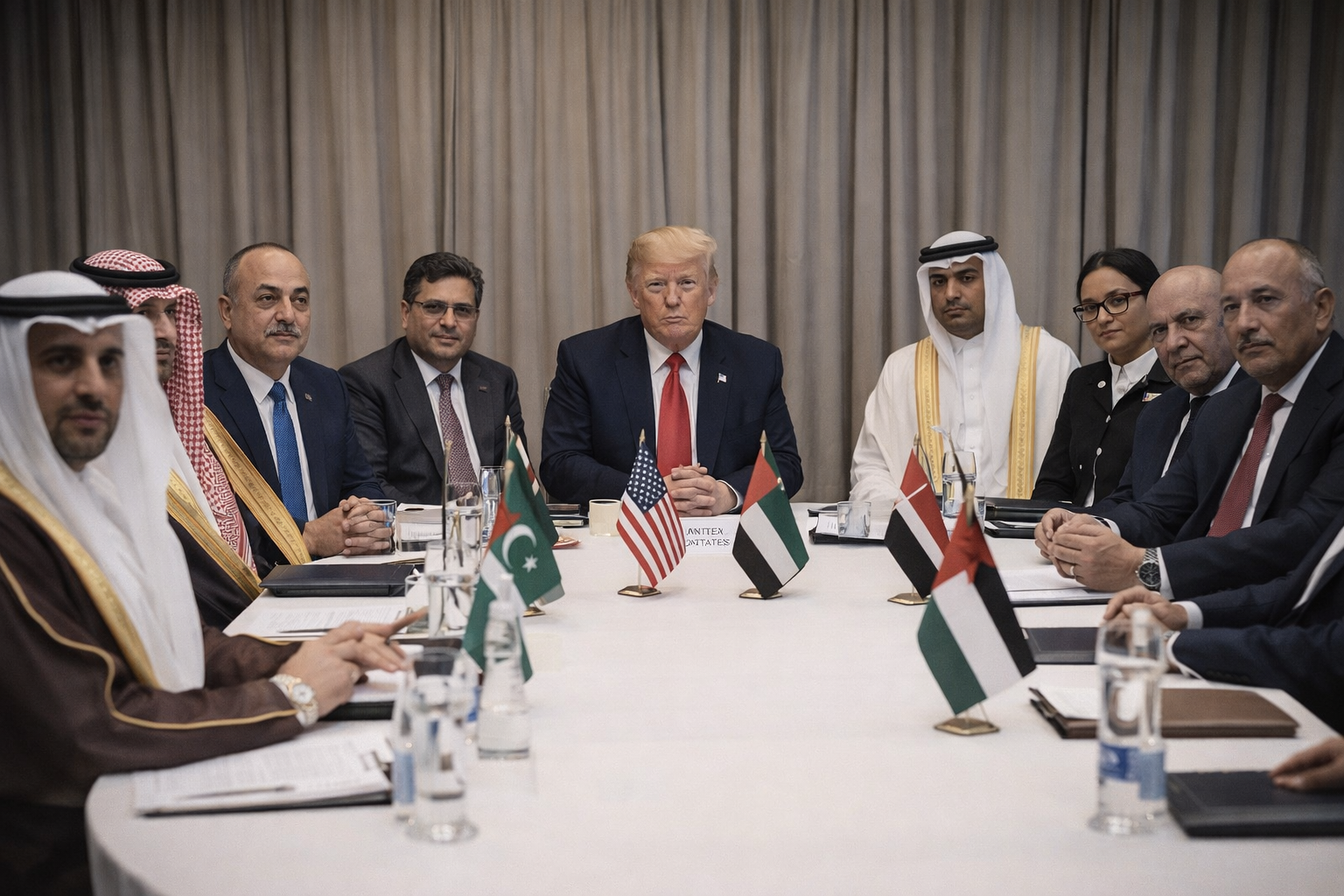
Leaders from Saudi Arabia, Turkey, Pakistan, and others back U.S.-led initiative aimed at ensuring lasting peace and reconstruction in Gaza.
A New Diplomatic Front for Gaza Peace Process
In a significant diplomatic development, eight prominent Islamic countries have officially agreed to join the newly proposed “Board of Peace,” a U.S.-led body announced by former President Donald J. Trump as part of efforts to implement a long-term solution to the Gaza conflict.
Foreign Ministers of Qatar, Turkey, Egypt, Jordan, Indonesia, Pakistan, Saudi Arabia, and the United Arab Emirates issued a joint statement on Wednesday confirming their participation. The statement welcomed the invitation extended by the Trump administration and affirmed their intent to proceed with the required legal formalities to formally join the initiative.
What is the ‘Board of Peace’?
The “Board of Peace” is a transitional administrative body introduced as part of Phase Two of the ongoing ceasefire agreement between Israel and Hamas. It is aimed at:
-
Enforcing a permanent ceasefire
-
Supporting the reconstruction of Gaza
-
Promoting regional stability and Palestinian self-determination
-
Mobilizing investment and international funding for the region
The body was formed under the broader Comprehensive Plan to End the Gaza Conflict, which has been endorsed by United Nations Security Council Resolution 2803. According to the Trump team, the Board is designed to oversee “governance capacity-building, regional relations, reconstruction efforts, investment attraction, and capital mobilisation.”
Strong Backing From Islamic Nations
In their statement, the foreign ministers expressed full support for Trump’s peace efforts, highlighting the collective will of the participating nations to pursue peace in accordance with international law and Palestinian sovereignty.
Three countries—Egypt, Pakistan, and the UAE—have already announced their formal intent to proceed with legal signing procedures. Others are expected to follow soon, according to diplomatic sources.
Reactions and Next Steps
Though welcomed by some as a proactive peace initiative, the “Board of Peace” has also drawn cautious reactions globally, particularly over its U.S.-centric leadership structure and the role it could play in regional geopolitics.
As part of the agreement, more world leaders have reportedly been invited to join the Board in the coming weeks, with aims to further expand its reach and legitimacy. The Trump administration emphasized that the board’s objectives are not only humanitarian but also strategic—ensuring the security of all nations in the region through cooperative development and political stability.
Key Highlights:
-
Countries Joining: Qatar, Turkey, Egypt, Jordan, Indonesia, Pakistan, Saudi Arabia, UAE
-
Lead Role: United States (Trump administration)
-
Mandate: Reconstruction, ceasefire enforcement, governance support in Gaza
-
Legal Framework: Based on UN Security Council Resolution 2803
-
Next Steps: Formal signings, diplomatic outreach, and operational structuring