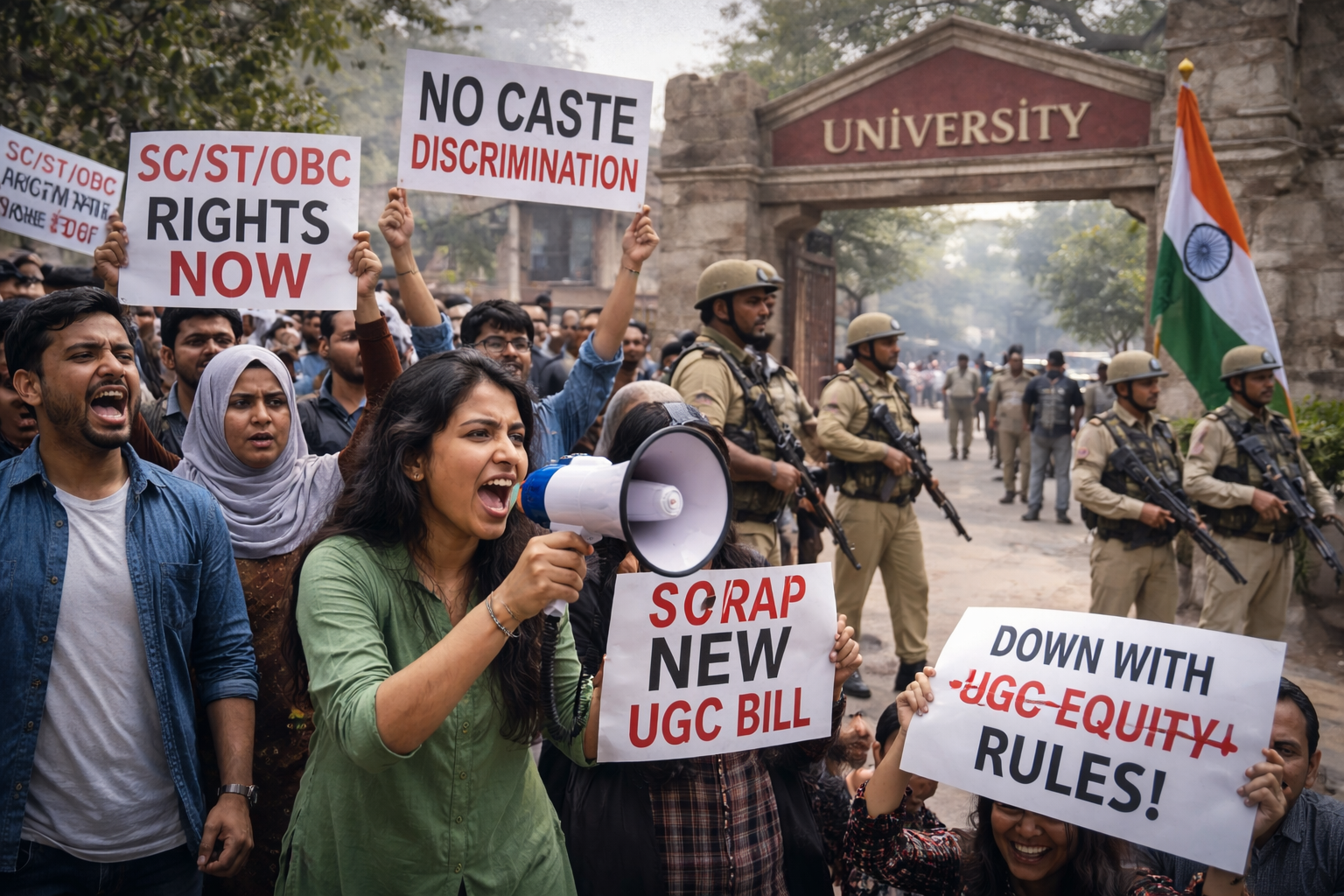

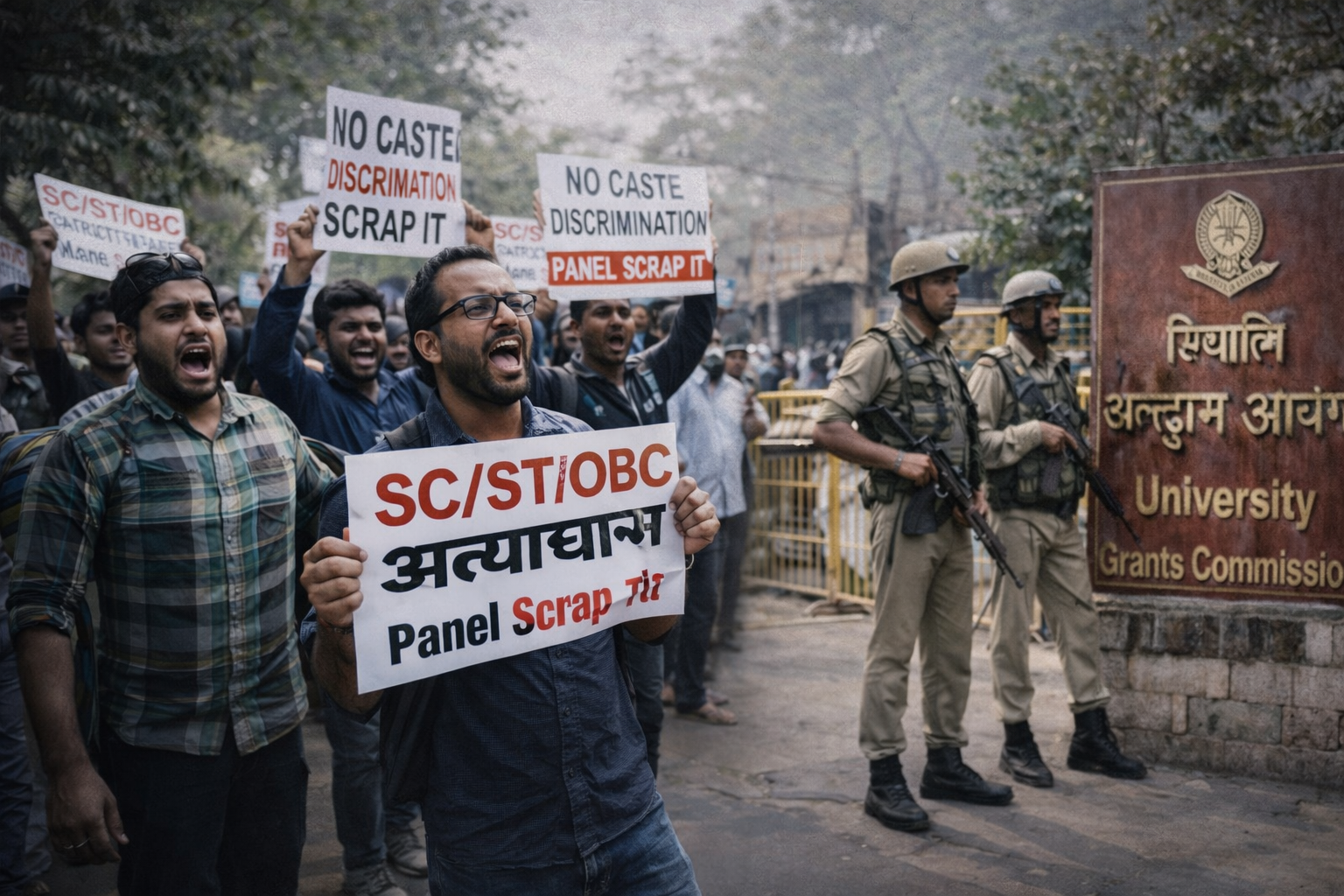
New UGC regulations aim to curb caste-based discrimination in universities, but critics say they exclude General category students and risk misuse.
The University Grants Commission (UGC) has introduced new regulations titled “Promotion of Equity in Higher Education Institutions Regulations, 2026”, intended to eliminate caste-based discrimination within Indian universities and colleges. However, the move has ignited widespread protests across the country, especially from General category students who claim the rules are biased and could be misused.
Why These Rules Were Introduced
The new rules come in response to directives issued by the Supreme Court of India in 2025 during hearings on cases related to the tragic suicides of Rohith Vemula and Payal Tadvi—both of whom were allegedly driven to take their lives due to caste-based harassment. Their mothers had filed Public Interest Litigations (PILs), urging for institutional reforms.
In light of these cases, the Supreme Court asked UGC to update its 2012 guidelines and implement stricter mechanisms to prevent caste-based bias in higher education institutions.
What Do the New Rules Say?
Under the 2026 regulations:
-
Every university and college must establish an Equity Committee.
-
These committees are responsible for addressing grievances from SC, ST, OBC, differently-abled individuals, and women.
-
The committee must include members from these communities and will monitor equality in campus environments.
-
The rules define discrimination as any direct or indirect behavior that undermines the dignity or equal opportunity of students based on caste.
The committee will have the authority to recommend disciplinary actions against those found guilty of discriminatory behavior.
Data Behind the Decision
According to UGC’s own report submitted to the Supreme Court:
-
Complaints of caste-based discrimination rose from 173 in 2017-18 to 378 in 2023-24—an increase of 118.4% in five years.
-
Despite over 90% of cases being resolved, the number of pending complaints grew significantly—from 18 in 2019-20 to 108 in 2023-24.
Why Are Students Protesting?
The rules have drawn backlash from General category students, who argue the regulations are one-sided. Their key concerns include:
-
The guidelines do not mention any protection for General category students from caste-related harassment.
-
There is a fear that false complaints could be weaponized against them under the new framework.
-
Some student organizations have already filed petitions in the Supreme Court, arguing that the rules violate the spirit of equal opportunity and fairness in education.
Critics say that instead of reducing discrimination, the selective focus of these rules could deepen social divides on campuses.