

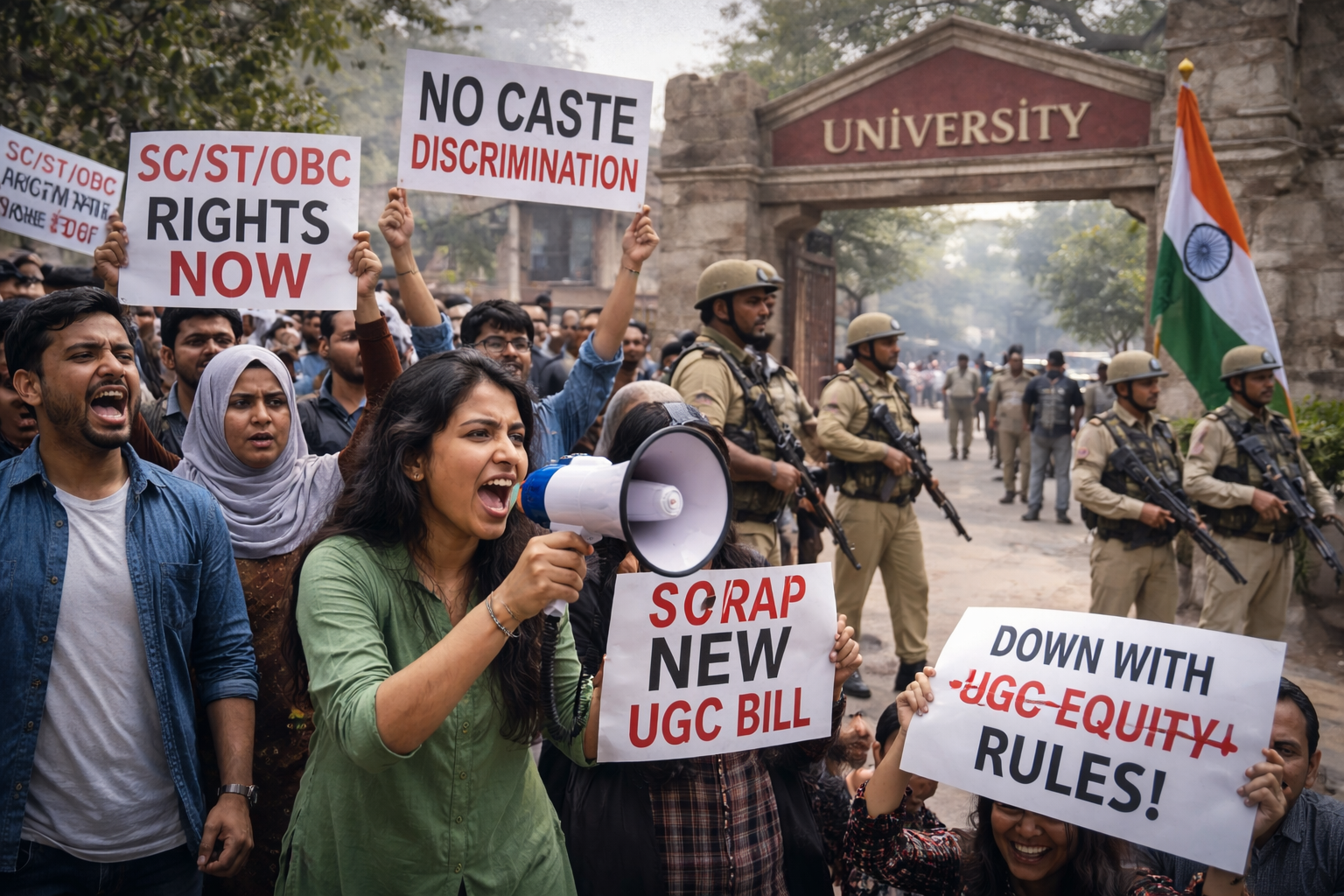
Institutions now face stricter obligations to prevent discrimination, but general category students fear bias in the newly broadened protections.
A Major Overhaul in Campus Equality Framework
In a landmark move, the University Grants Commission (UGC) has rolled out the Promotion of Equity in Higher Education Institutions Regulations, 2026—a sweeping reform aimed at eliminating caste-based bias and institutional discrimination in Indian colleges and universities.
The bill, which is now legally binding, requires all higher education institutions to adopt a structured and accountable approach to ensure fairness, inclusion, and dignity for all students—especially those from Scheduled Castes (SCs), Scheduled Tribes (STs), and for the first time, Other Backward Classes (OBCs).
Why the New Equity Rules Are Making Headlines
Though the intention behind the 2026 regulations is to build a more inclusive learning environment, the bill has triggered fierce protests on campuses and backlash on social media. Critics argue the rules lack balance and exclude protections for general category students, raising concerns over reverse discrimination and misuse of grievance mechanisms.
What’s drawing the most scrutiny is the expanded definition of discrimination, which now includes not only overt acts but also indirect, verbal, symbolic, or systemic exclusion.
What Led to the UGC’s New Guidelines?
The updated rules are rooted in data submitted by the UGC itself and follow directions from the Supreme Court of India, which asked the commission to revamp its outdated 2012 anti-discrimination policy.
The UGC had reported a 118% surge in caste discrimination complaints between 2017 and 2023. The tragic suicides of students like Rohith Vemula and Payal Tadvi, linked to caste-based harassment, had already intensified public demand for reform.
What Changes with the 2026 UGC Regulations?
Key provisions in the new regulations include:
-
Mandatory Equal Opportunity Centres (EOCs): Every institution must establish one.
-
Equity Committees: Comprising members from SC, ST, OBC, women, and persons with disabilities.
-
Equity Ambassadors & Helplines: Institutions must deploy monitoring squads and provide 24/7 helpline support.
-
Defined Reporting Timelines: Bi-annual internal reviews and public disclosure of complaints.
The law also introduces an Ombudsperson role—an external authority empowered to resolve unresolved discrimination grievances.
Protests & Petitions: The Rising Opposition
While social justice groups have welcomed the new safeguards, students from the general category, along with some faculty and politicians, claim the policy creates a skewed environment.
They argue the bill:
-
Ignores upper-caste students’ grievances.
-
Provides no checks against false accusations.
-
Could politicize campus life under the guise of equity.
A Public Interest Litigation (PIL) has already been filed in the Supreme Court, questioning the constitutional validity of selectively defining discrimination.
UGC’s Stand and Next Steps
UGC officials maintain that the bill is rooted in constitutional values of equality and institutional accountability. Failure to comply could result in withdrawal of funding, blacklisting from UGC recognition, or even closure of academic programs.
The success of this legislation will largely depend on how universities implement the changes on the ground and how grievances are resolved without bias or political interference.


